Surfaces of Time: Architecture in Composition
1st-5th December 2026
When we encounter a building or an artwork, we often ask: How old is it? How long did this take? Both questions reveal how instinctively we use time to understand what we see.
Across six series, Minty Sainsbury explores the time held in architecture and the act of making. Weathered surfaces carry the marks of a building’s history, while layers of graphite and worn pencils give physical form to time spent drawing.
The work moves from detailed architectural observation into abstraction, exploring graphite as a material in its own right and reducing windows and openings to simple shapes. These forms become the basis for paintings in ink and coloured acrylic, in which proportion and colour change the feeling of a composition.
1. Focus & Isolation
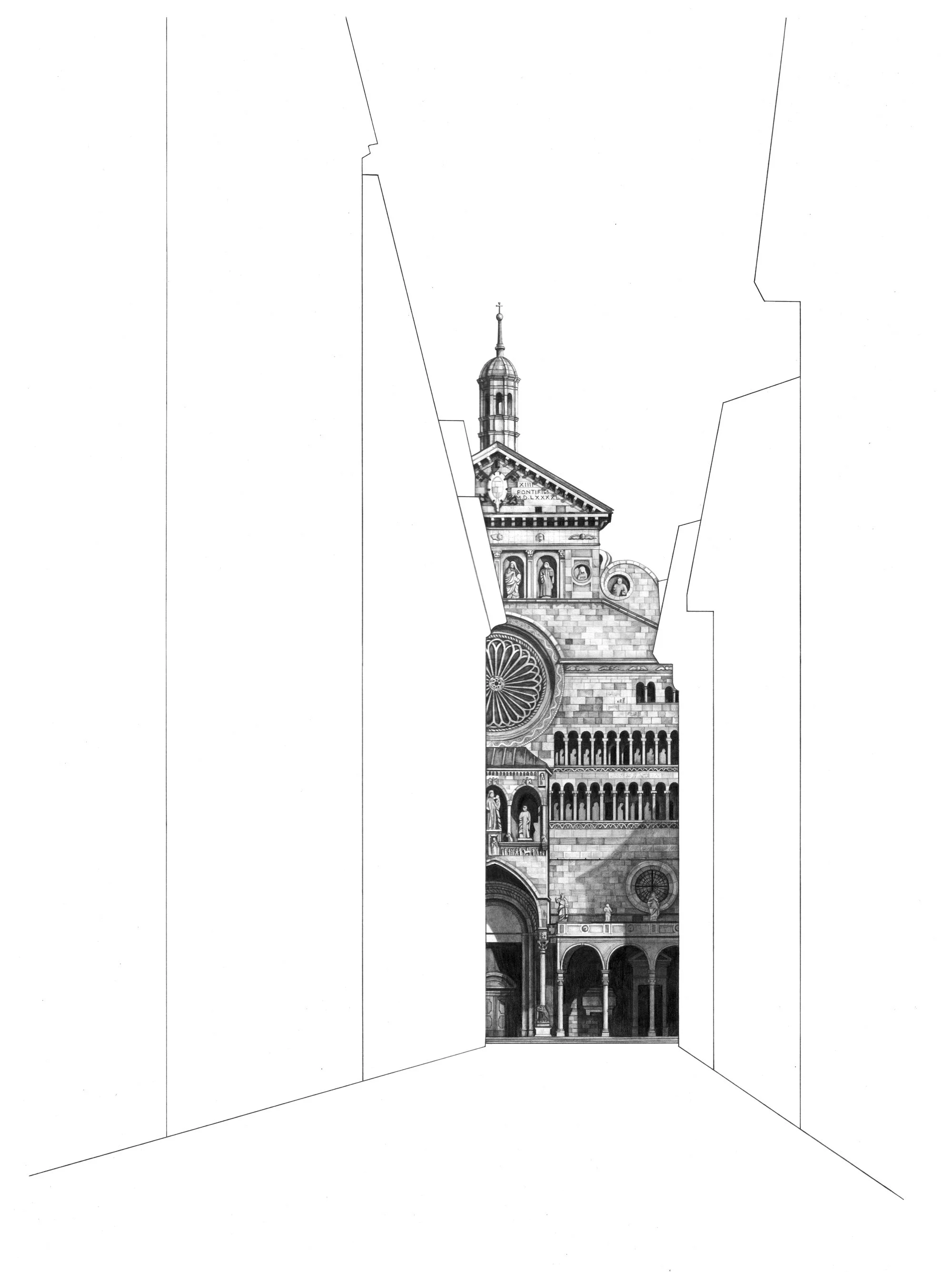
These drawings use composition to direct attention towards a single building. Framed by a street or isolated from its surroundings, familiar architecture can take on a more monumental presence. I’m interested in how changing a building’s relationship to what surrounds it changes the way we see it.
I began this series twelve years ago. It includes street views and towers, alongside isolated drawings of façades. These drawings form the basis of most of my architectural prints.
2. Architectural Crops & Fragments
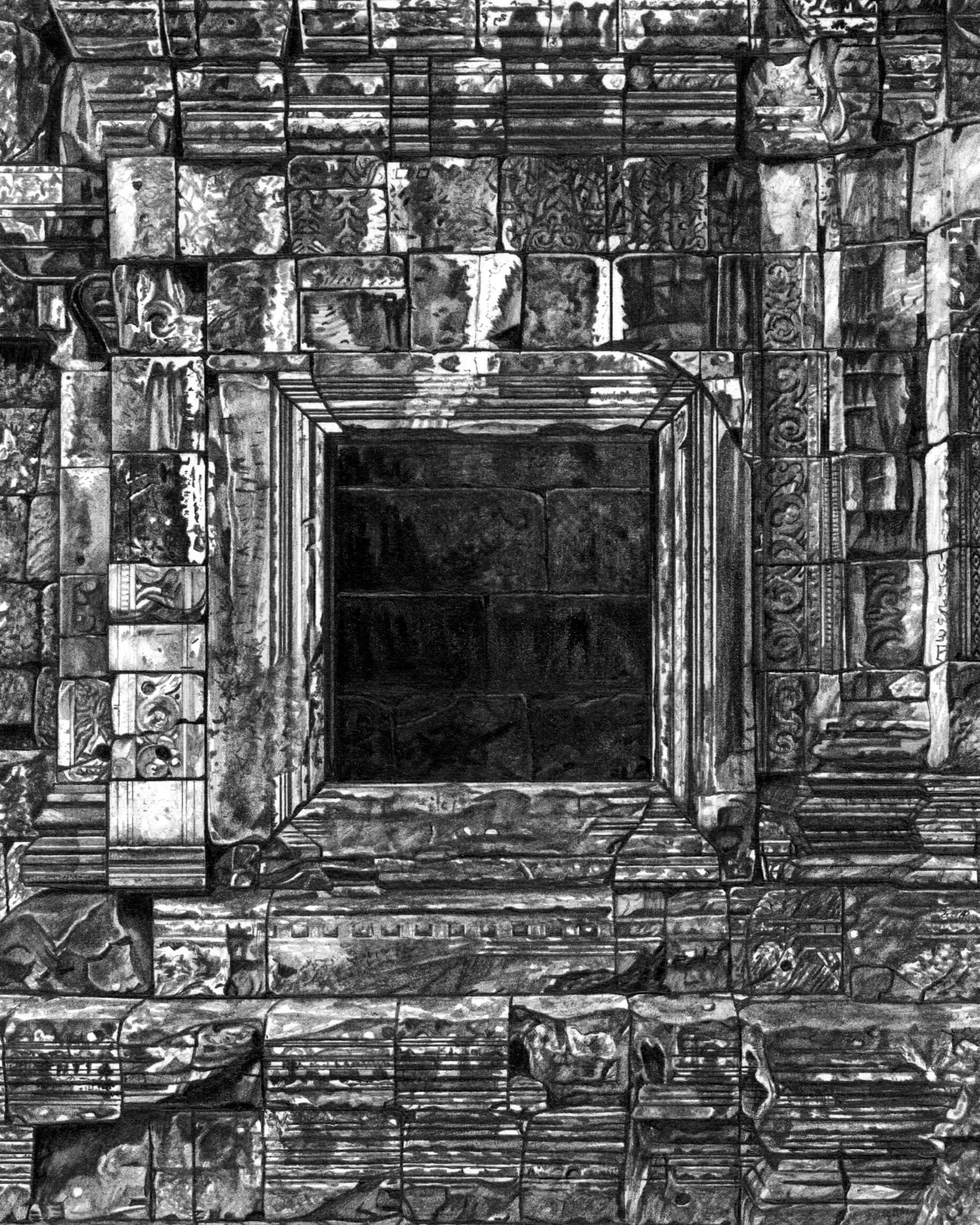
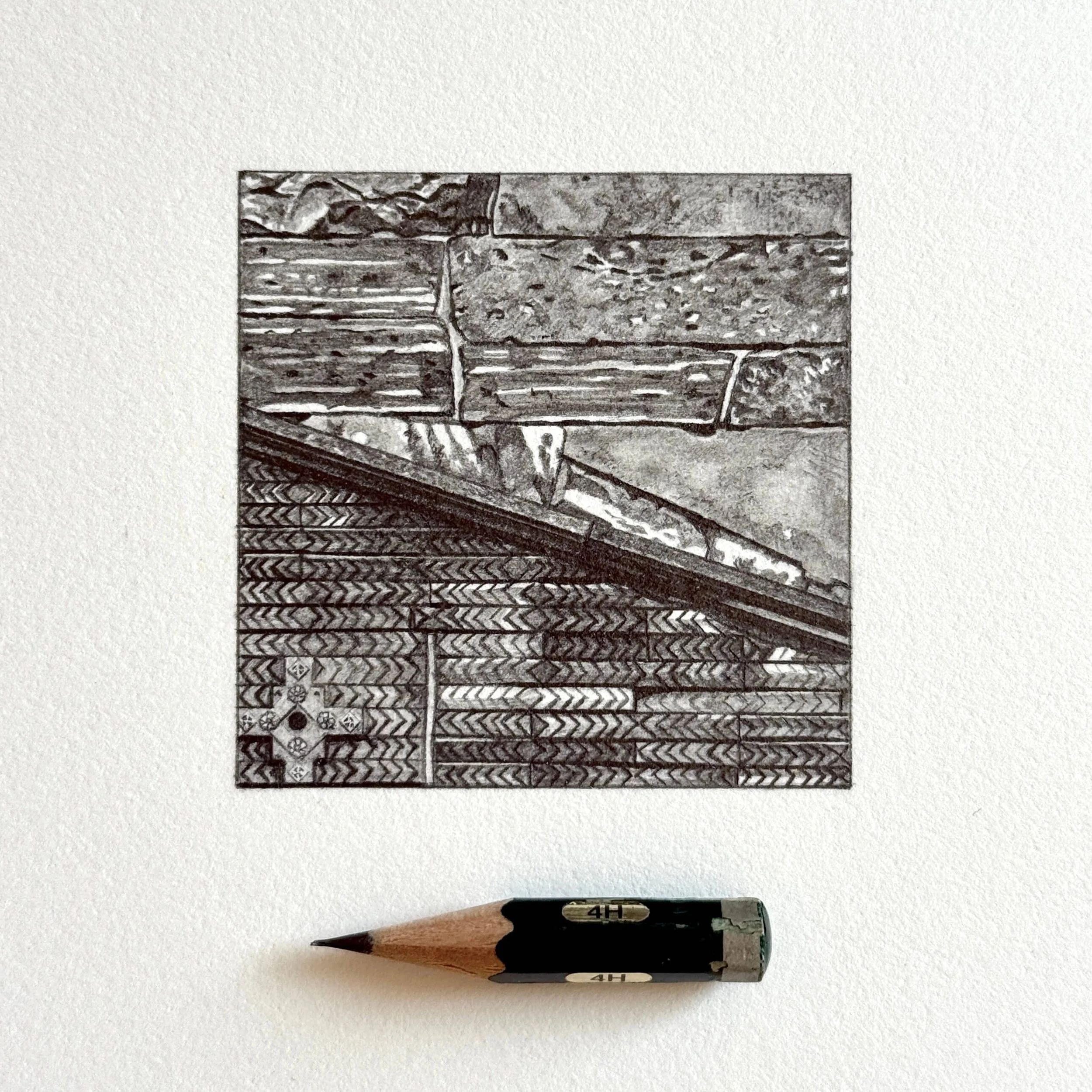
These closely cropped graphite drawings focus on architectural surfaces shaped by time. I crop buildings so tightly that their identities become difficult to recognise, directing attention towards details that might otherwise be overlooked. Weathered stone and worn carvings hold a record of the building’s history.
In some works, a dark window sits at the centre. From a distance, its rich darkness anchors an almost abstract composition; closer up, the surrounding detail becomes apparent. I’m interested in the contrast between the information held in the exterior and the unknown space within.
3. A Measure of Time
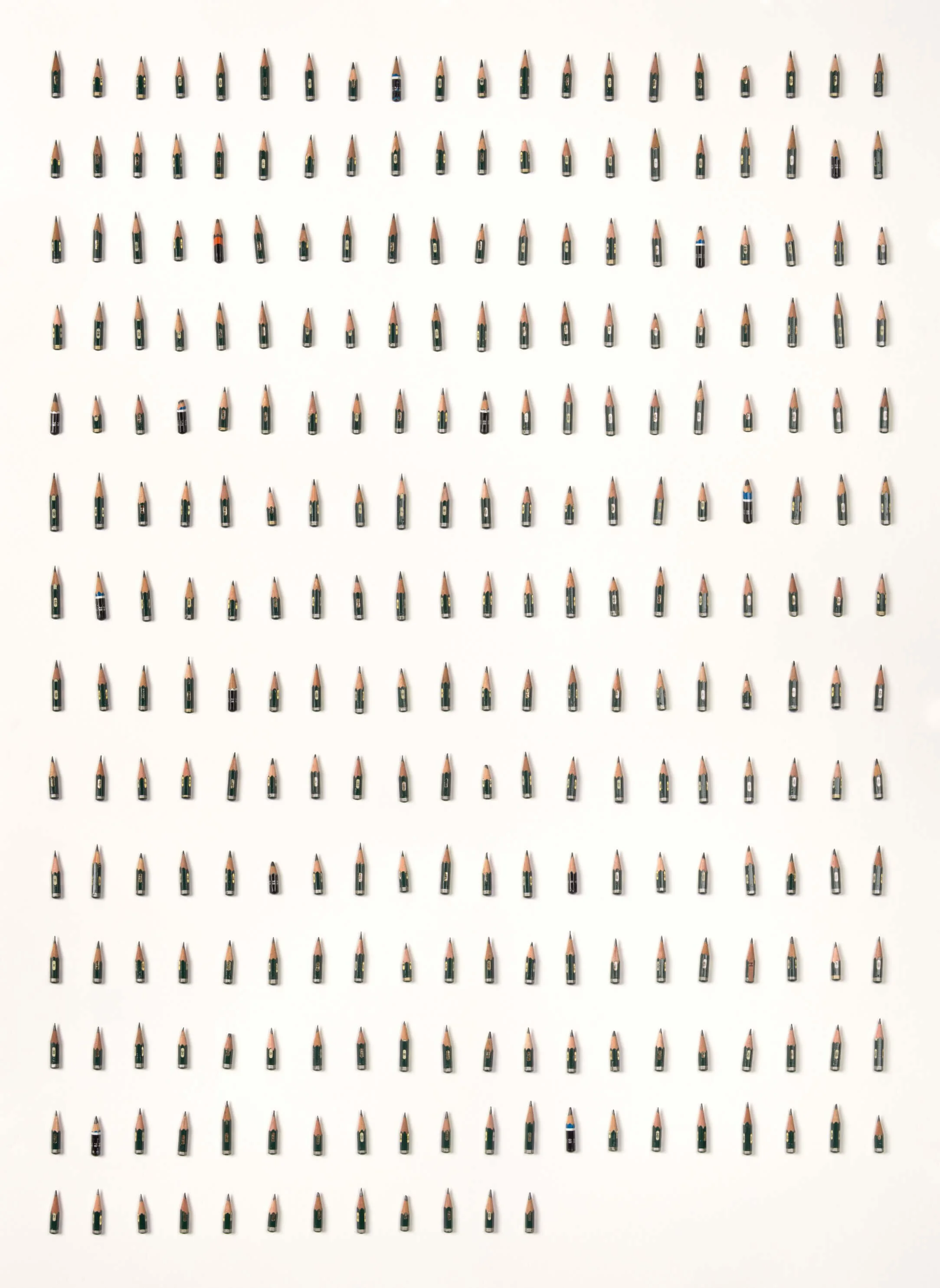
Over nine years, I kept every pencil stub produced through my work. The 272 worn pencils became the subject of Practise. This piece was the catalyst for a series exploring the physical pencil through sculptural works and drawings.
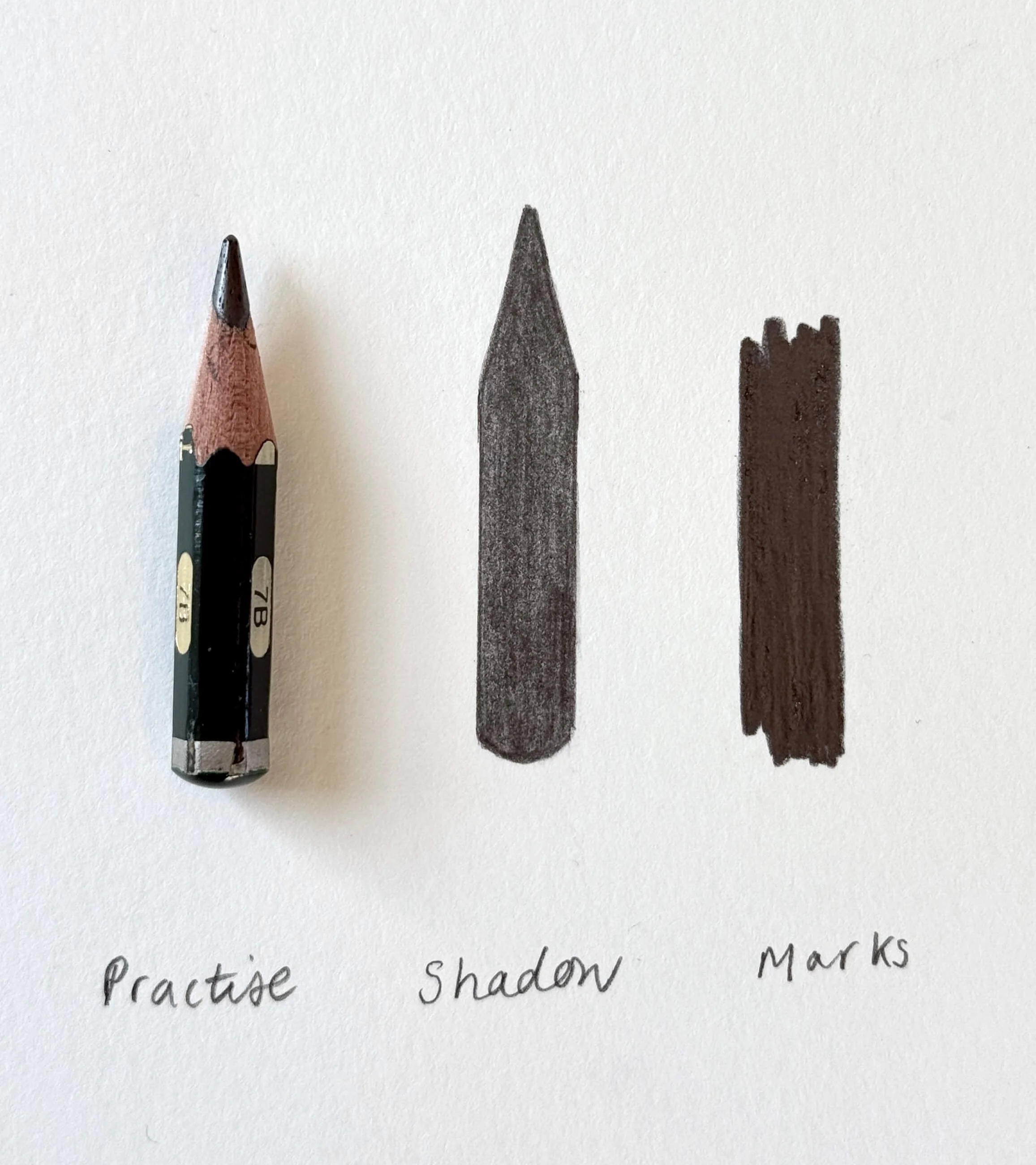
Each shortened pencil records time spent drawing. Together, they give physical form to years of work, revealing the gradual wearing down of a tool that is rarely visible in the finished artwork.
4. Dense Graphite
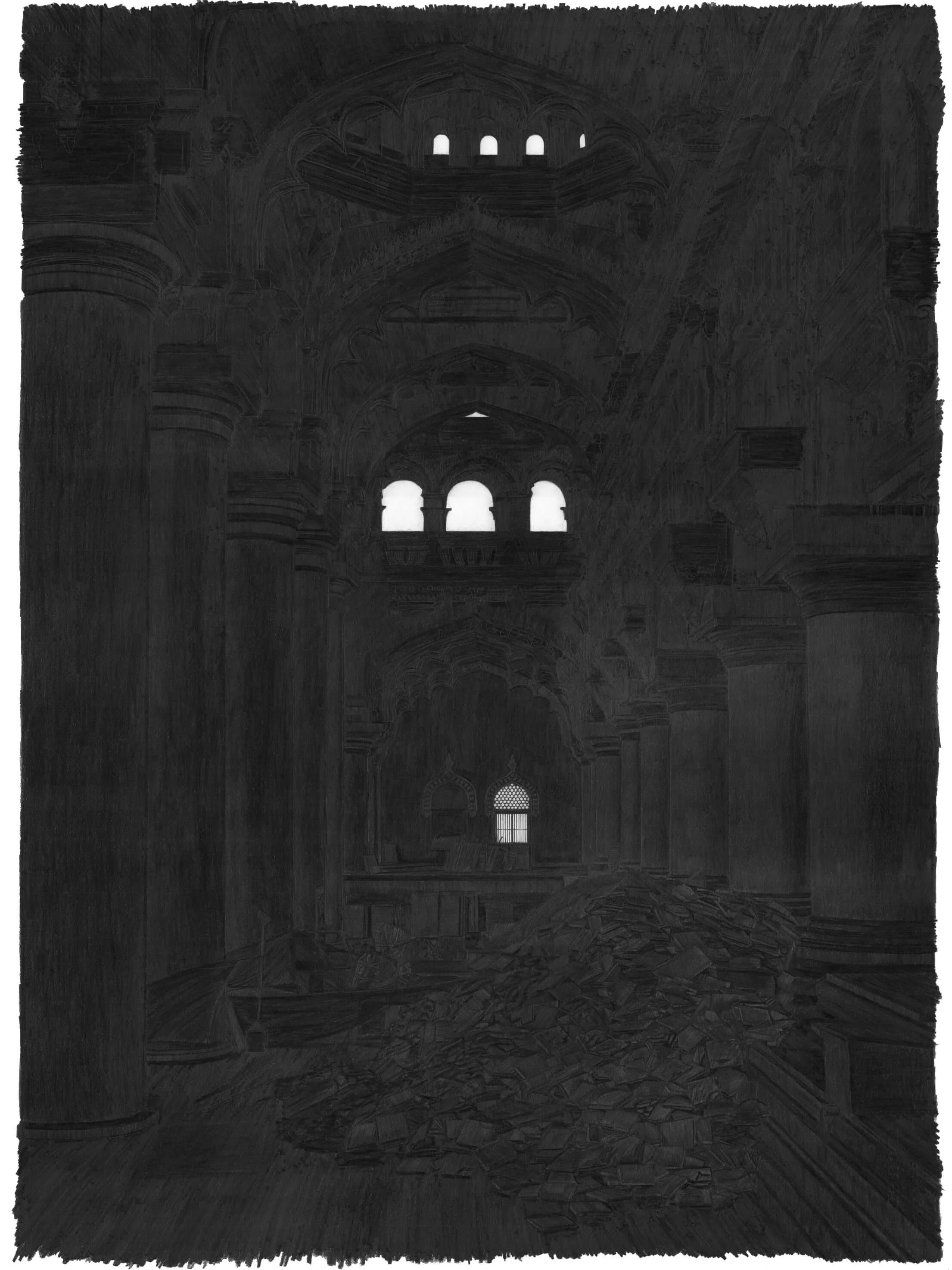
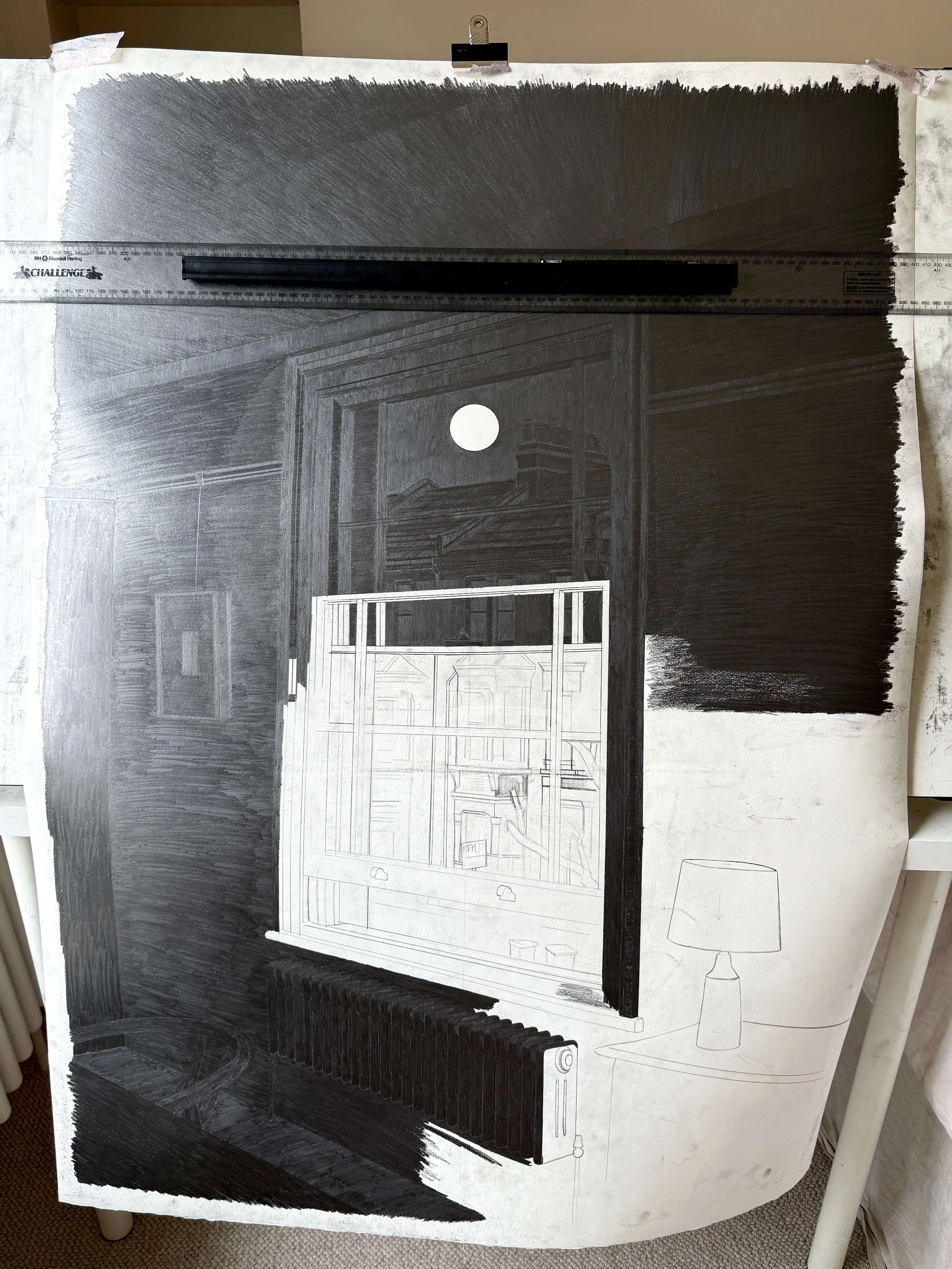
In works such as Palimpsest, repeated applications of graphite build dense, reflective surfaces. The time spent making becomes part of the drawing’s physical presence.
At first glance, the image can be difficult to discern. As the light catches the graphite, it begins to emerge. I’m interested in this uncertainty: something is present but cannot immediately be seen.
My most recent work in this series, A Pause in Time, depicts a full moon through a window. The view holds a moment of stillness and longing, setting the comfort of the interior against the unknown outside. The full moon marks a particular moment within a repeating cycle.
5. Indian Ink
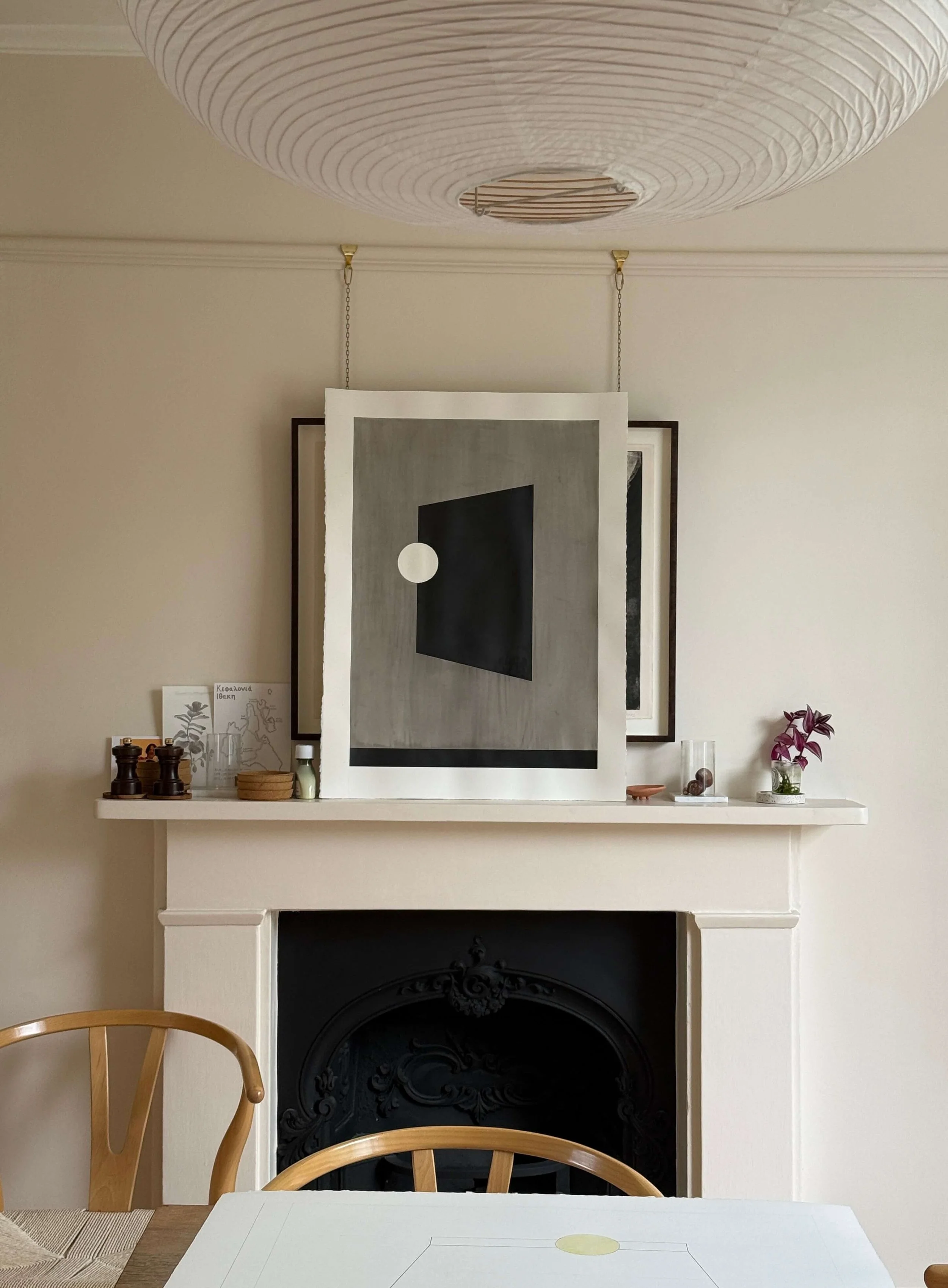
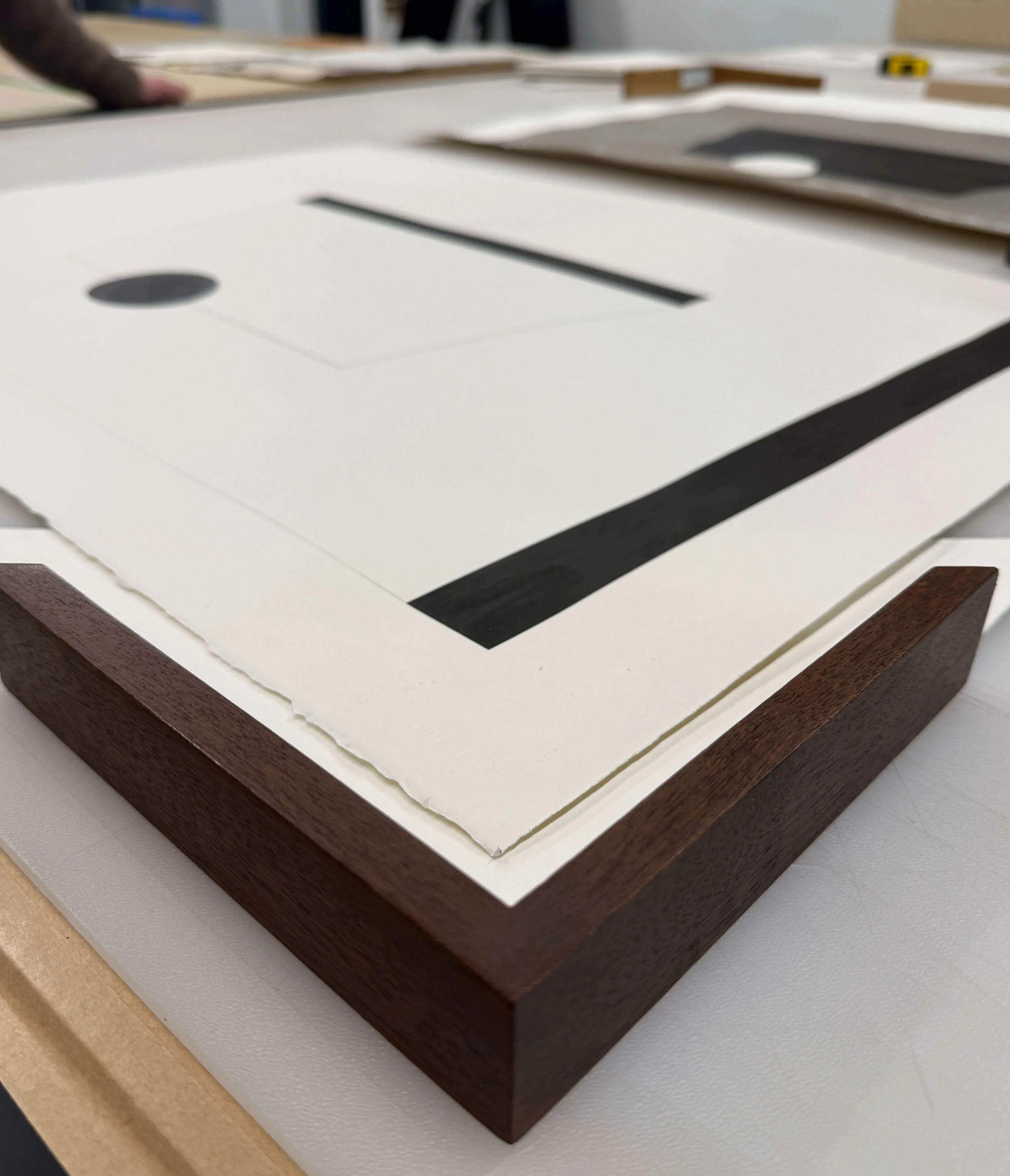
These works take the moon drawing further into abstraction, reducing the architectural forms to a window shape and a circle.
The simple forms become a starting point for play with composition. Their proportions and placement give the image its structure and balance. I change these relationships to explore how they affect the feeling of the image. Something of the original view remains, even as the composition becomes increasingly abstract.
6. Coloured Acrylic Paintings
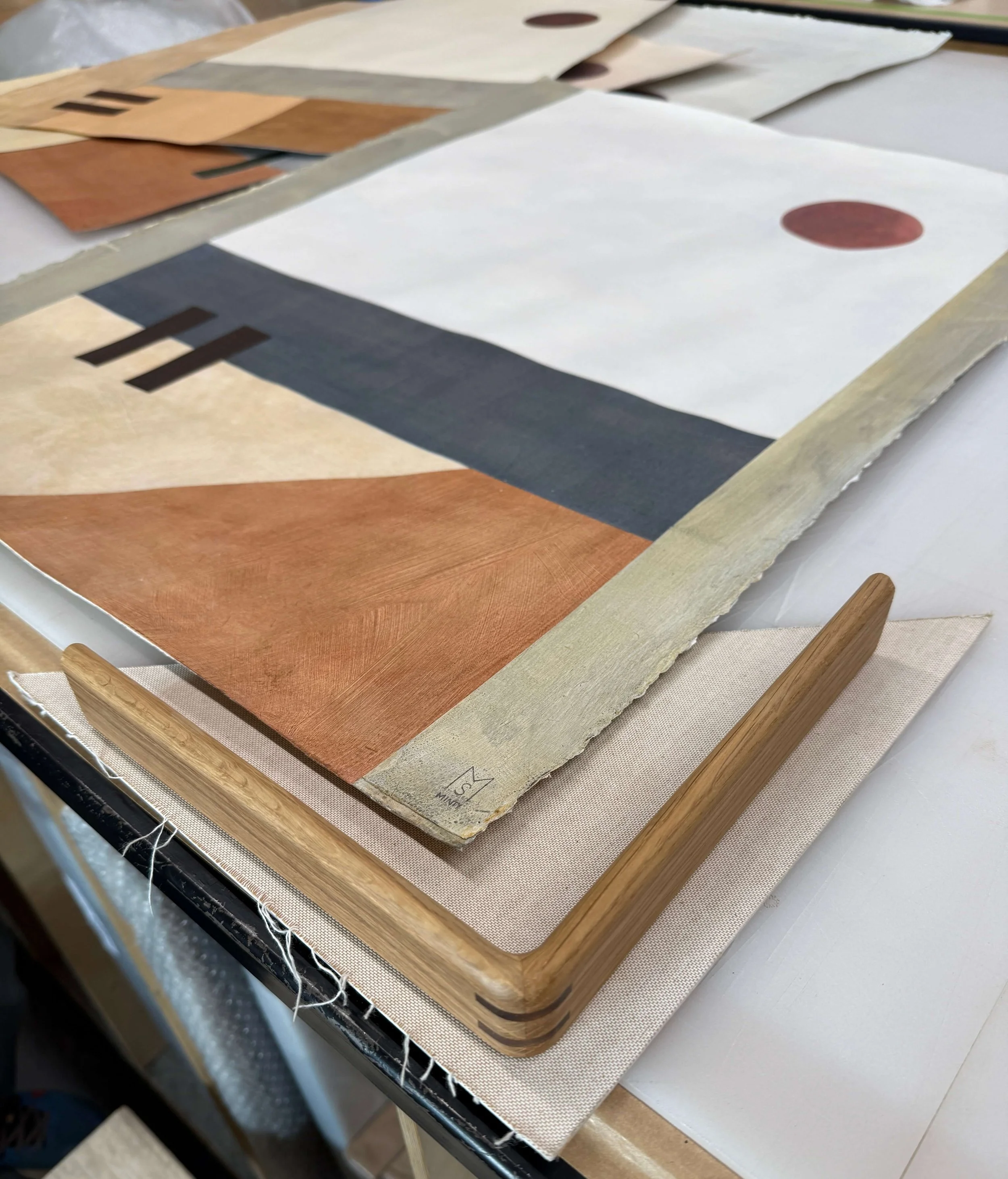
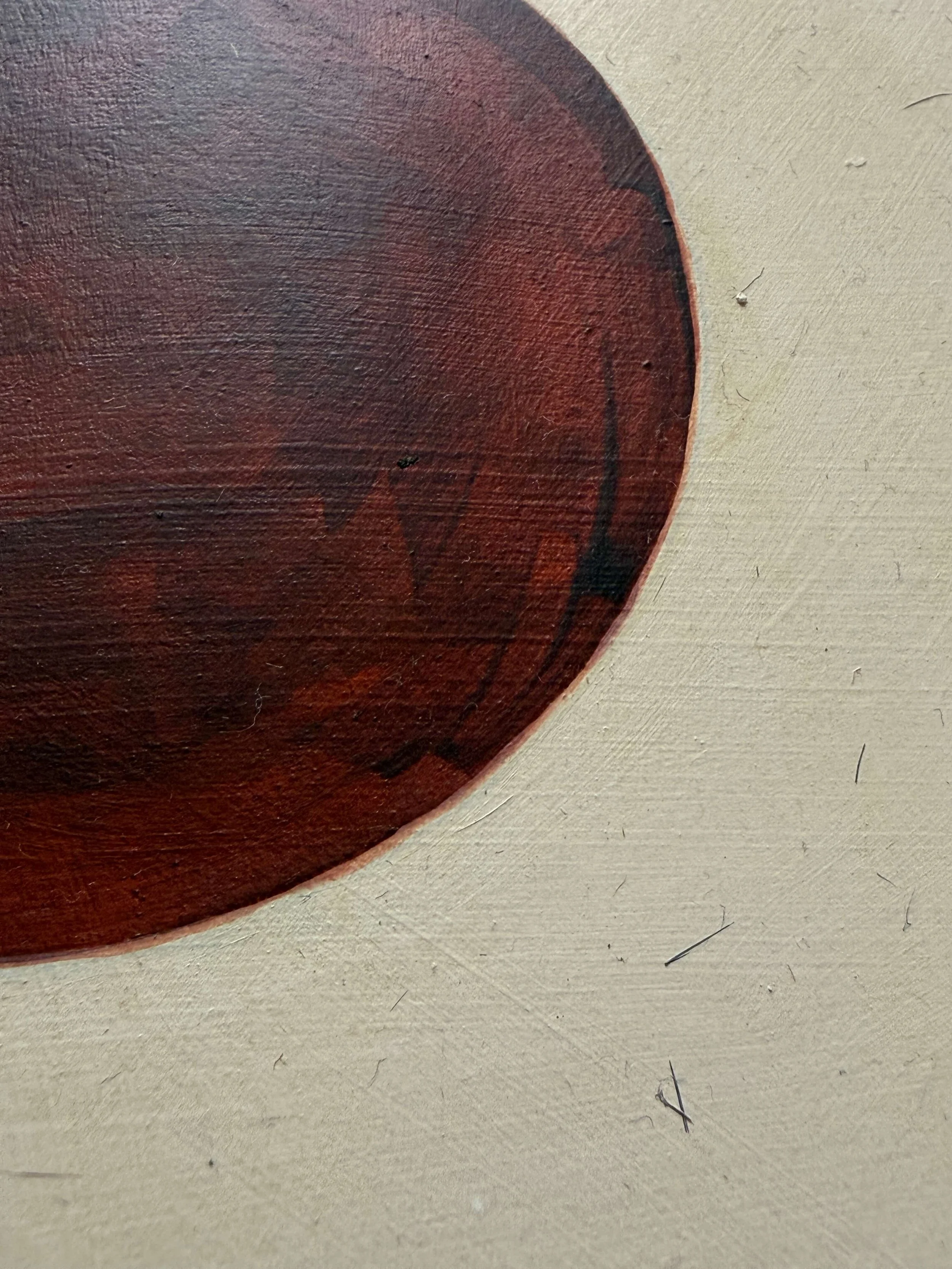
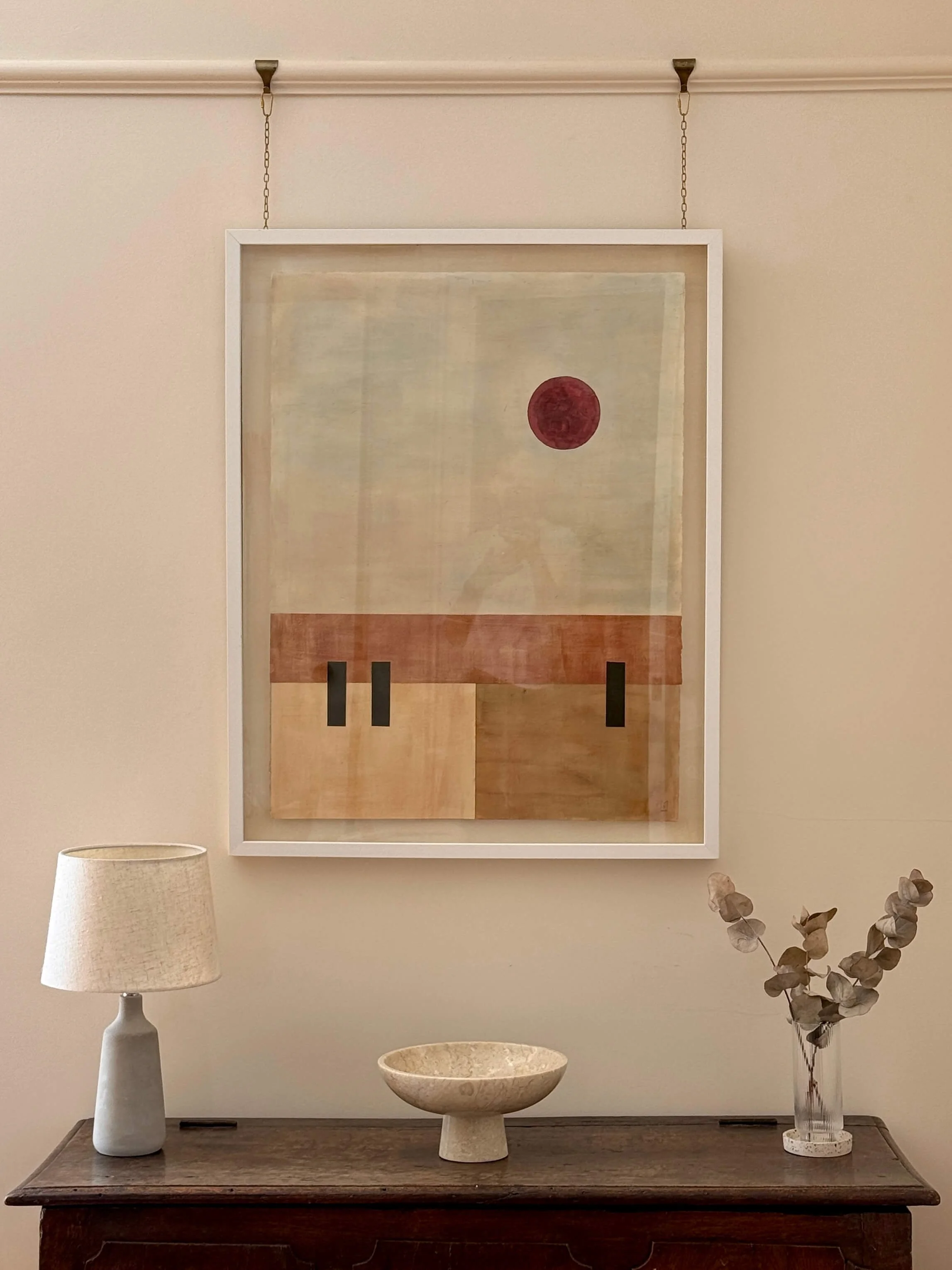
The coloured paintings continue this exploration of proportion and balance. Circles recur, suggesting suns and connecting these works with the moon drawing and Indian ink compositions.
Here, shape and colour become subjects in their own right. I’m interested in how forms sit alongside one another, and how a change of colour can alter the feeling of the whole composition.